African Overland Tours
https://www.facebook.com/AfricanOverlandTourscom/
https://www.instagram.com/african_overland_tours/
https://www.youtube.com/@africanoverlandtoursandsafaris
+27 (0) 21 448 0997
Customer Service
Worldwide
Jenman
Length
15 days
Tour Type
Smaller Group Tours, Accommodated
Starts
Nairobi
Comfort Level
Premier
Ends
Nairobi
Age Range
Min 12 years to 80 years old
Tour SKU
ASC4115
Operated in
English Guided
Group Size
Min 4 Max 7
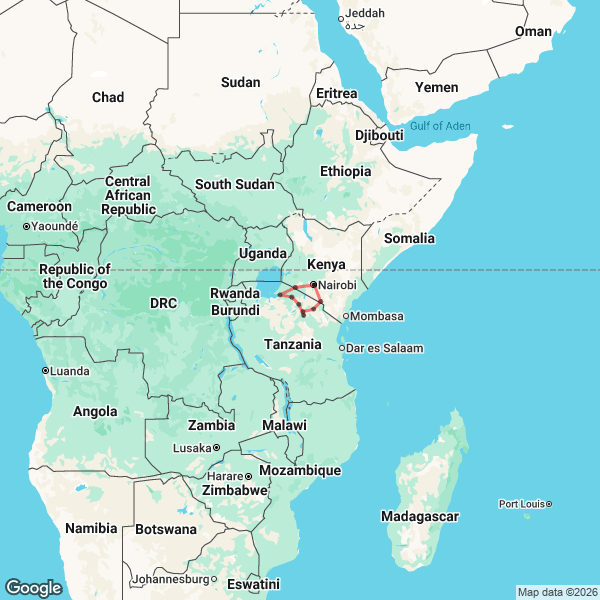
Discover the enchantment of East Africa with our East Africa Migration Discoverer! Embark on a 15-day odyssey through Tanzania and Kenya, witnessing the awe-inspiring wildebeest migration (seasonal) and uncovering the region’s hidden treasures. This intimate safari experience offers comfortable accommodations in lodges, chalets, and permanent tented camps each night. Starting and ending in Nairobi, our journey encompasses the Serengeti, Amboseli, Lake Manyara, and Tarangire National Parks, as well as the Ngorongoro Crater. Immerse yourself in the wonders of East Africa with our expert-led tour.
15 Day Tanzania and Kenya Tour – East Africa Migration
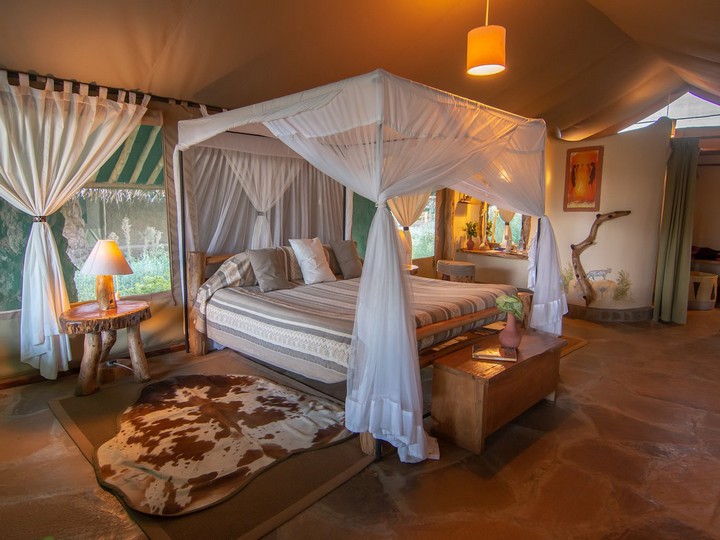
This 15 Day East Africa Migration Safari lodge safari and follow the famous wildebeest migration through Tanzania and Kenya and discover all the wildlife that East Africa holds. This East Africa accommodated safari is a Small Group Safari (max 12) where you will spend all of your nights in lodges/chalets or permanent tented camps.
https://africanoverlandtours.com/wp-content/themes/africanoverlandtours/images/placeholder-img.jpg
2025-05-23T07:49:58+00:00
https://www.youtube.com/embed/Gqr0rRUea-o
African Overland Tours
https://africanoverlandtours.com
https://africanoverlandtours.com/wp-content/uploads/2025/04/logo.svg
As soon as you arrive at Jomo Kenyatta International Airport, you will be greeted and transferred to your hotel, where you will spend the night relaxing.
The Boma Hotel or similar
Dinner
± 20 km
± 30 min (traffic dependent)
After breakfast, if scheduling permits, you will pay a morning visit to the Kazuri Beads Center. Here, you can watch local women craft beautifully intricate ceramic beads and pottery by hand—an inspiring social enterprise providing sustainable employment. Afterward, the journey leads away from the city, descending into the Great Rift Valley and pushing onward to the iconic Masai Mara National Reserve. This legendary wilderness serves as the ancestral grazing grounds for the Maasai people, whose vibrant culture blends seamlessly with the landscape. Arrive at your camp nestled near the riverine forests and settle in.
Fig Tree Camp Masai Mara or similar
Breakfast, Lunch, Dinner
Daphne Sheldrick Animal Orphanage Visit, Nairobi National Park Game Drive
± 280 km
±5 – 6 hours
We spend the entire day viewing game in the world-famous Masai Mara National Park. The varied habitats here are home to a wide range of wildlife, including lions, leopards, cheetahs, zebras, wildebeests (gnus), giraffes, buffalo, jackals, topis, gazelles, impalas and elephants. There is a great deal of wildlife in the rivers, including hippopotamus and crocodiles, as well as a great deal of bird life.
Fig Tree Camp Masai Mara or similar
Breakfast, Lunch, Dinner
Full Day Game Drive
After crossing the Tanzanian border this morning, we continue our journey southwards to Lake Victoria. The afternoon may be spent relaxing or taking a bird walk along the lakeshore. The border crossing into Kenya will require a change of guides and vehicles.
Serenity on the Lake Resort or similar
Breakfast, Lunch, Dinner
± 270 km
± 6 – 8 hours (border crossing dependent)
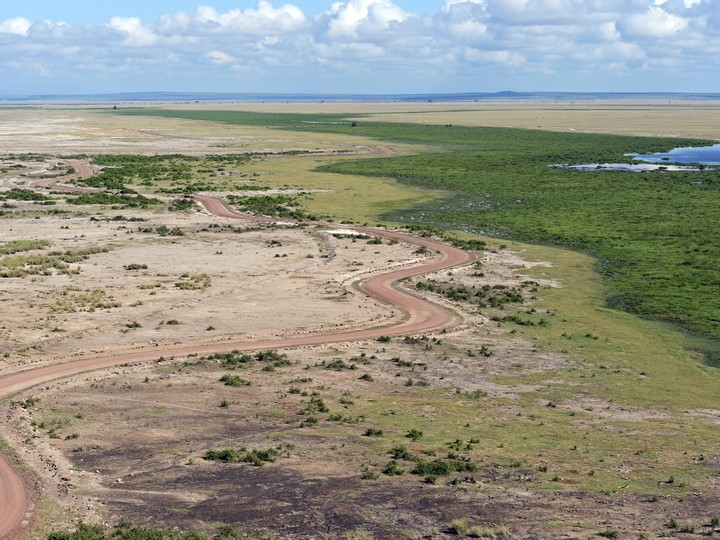
The morning of our trip will be spent participating in a boat excursion to a local fishing village before bidding Lake Victoria farewell and continuing our journey south to the Serengeti National Park. During our journey, we pass through the villages of the Sukuma tribe, which cultivates ground nuts, sorghum, and cassava, as well as keeping livestock. There are a few poignant reminders of the 20th century here, but life goes on as it has for centuries. By way of the stunning central plains, we travel towards the Serengeti. A major attraction of the Serengeti is its endless, undulating grassland dotted with isolated rocky outcrops that provide refuge to wildlife.
Kisura Serengeti Camp or similar
Breakfast, Lunch, Dinner
Lake Victoria Boat Cruise
± 250 km
± 4 – 5 hours (including game drive speeds)
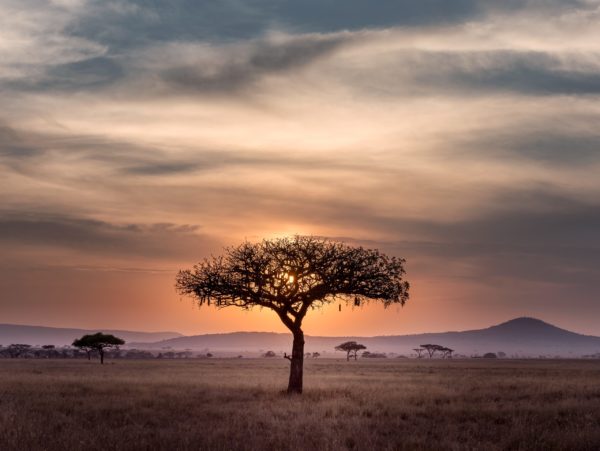
A full day of game viewing is scheduled for today in the Seronera area of the Serengeti. There are three main areas in the Serengeti: Seronera is the most central and accessible region, and it is here that the Serengeti Park Headquarters is located as well as most of the larger lodges and communal campsites. A large area of grassland characterizes this part of the Serengeti, which is teeming with wildlife. A great deal of game viewing is possible all year round along the Seronera River, which serves as the lifeblood of the Serengeti. It is also particularly good for lion and cheetah sightings, as well as the most elusive of all big cats, the leopard.
Kisura Serengeti Camp or similar
Breakfast, Lunch, Dinner
The Serengeti National Park awaits us for another exciting day of exploration. The afternoon is spent on a game drive, scanning the endless plains, spotting many animals, and truly understanding why this park is so highly regarded. We return to the lodge in the late afternoon for an overnight stay.
Kisura Serengeti Camp or simila
Breakfast, Lunch, Dinner
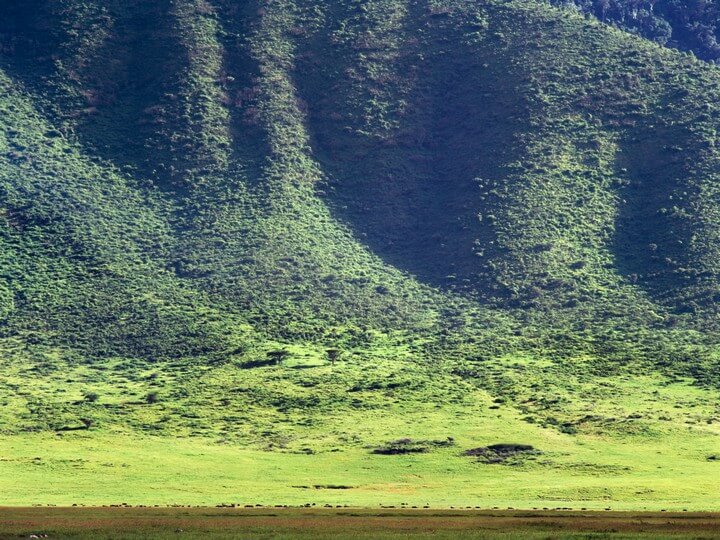
Leaving early this morning, we will travel through the stunning Southern Plains of the Serengeti. On our way to the world renowned Ngorongoro Crater, we will go on a game drive. The experience of witnessing this wildlife spectacle is considered by many to be the pinnacle of their safari. As well as all five of the ‘Big 5’, the Ngorongoro Crater also contains a small population of the endangered black rhinoceros. Upon arrival in Karatu, we spend the night in the small village.
Karatu Simba Lodge or similar
Breakfast, Lunch, Dinner
±400 km (including the Crater)
± 6 – 7 hours (mostly at game drive speeds)
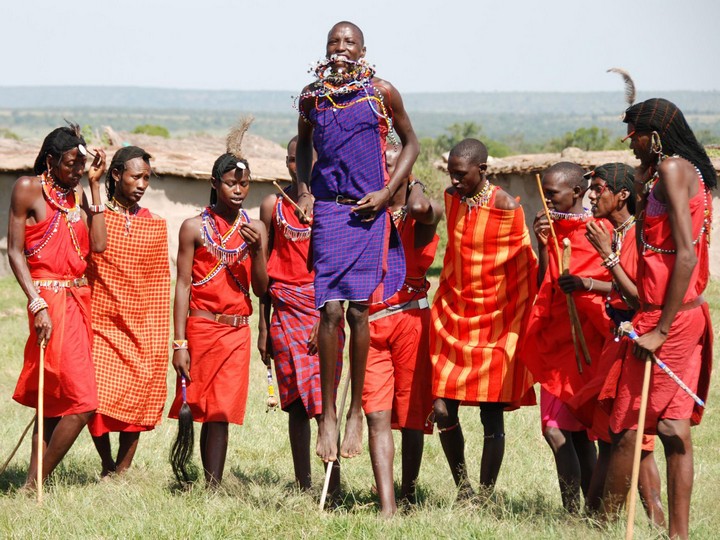
We start the day with a visit to the market and see a Chagga family producing banana beer, passing by many different farms on the way. After breakfast, we set out to experience the cultural diversity of Mto-wa-Mbu. In the course of the tour, your guide will introduce you to a variety of fruits and vegetables that are grown in the area and explain the irrigation system that sustains them. Our cultural encounter begins with a delicious homecooked meal in a local Mama’s home followed by a visit to the Maasai Boma. Known for their distinctive traditional attire, the Maasai people live semi-nomadic herding lifestyles. A walking tour of Lake Papyrus takes place in the late afternoon. This magnificent lake is home to an abundance of birdlife as well as hippos. The waterfall can be reached by light hiking if time permits. A visit to the local village will conclude the tour. From here you will be able to view the lake on top of the Rift Valley wall, as well as the banana plantation and rice field. Our journey concludes with an overnight stay at the lodge, followed by dinner.
Karatu Simba Lodge or similar
Breakfast, Lunch, Dinner
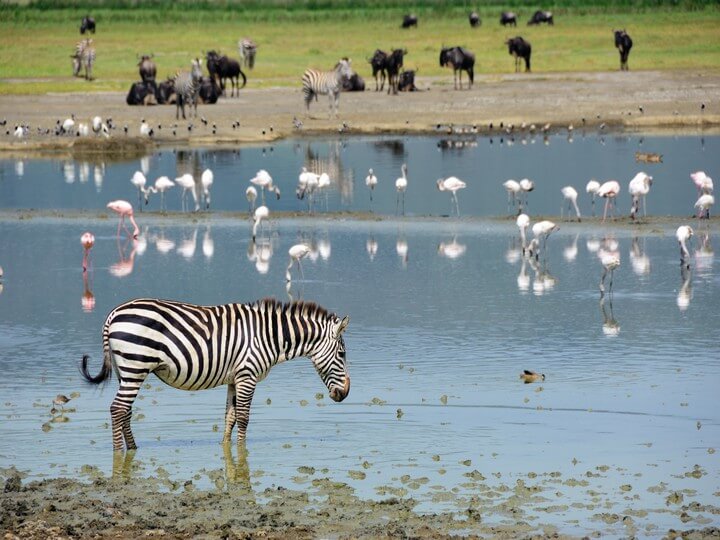
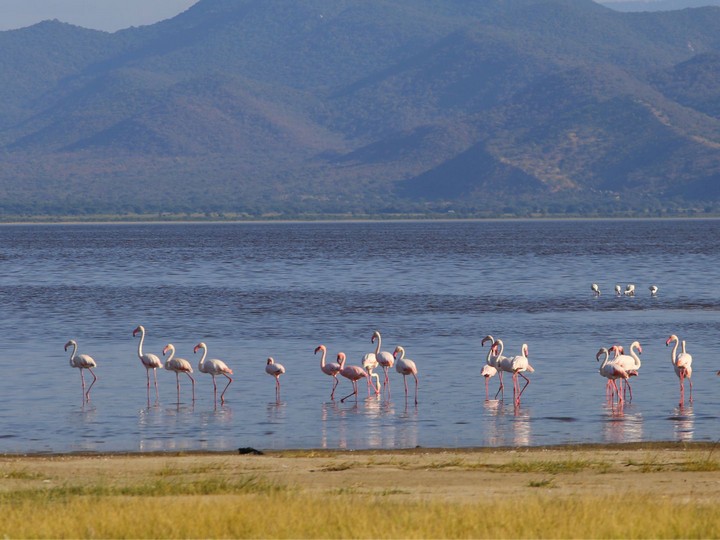
We will collect you from the hotel after breakfast and take you to the Lake Manyara National Park. At the foot of the Great Rift Valley’s western escarpment, the reserve lies at the north-western corner of Lake Manyara, a large, shallow soda lake. It is a pleasure to experience a scenic drive in this park that is known both for its large flocks of flamingos and for its elusive tree climbing lions.
Tarangire Simba Lodge or similar
Breakfast, Lunch, Dinner
± 130 km
± 2-3 hours
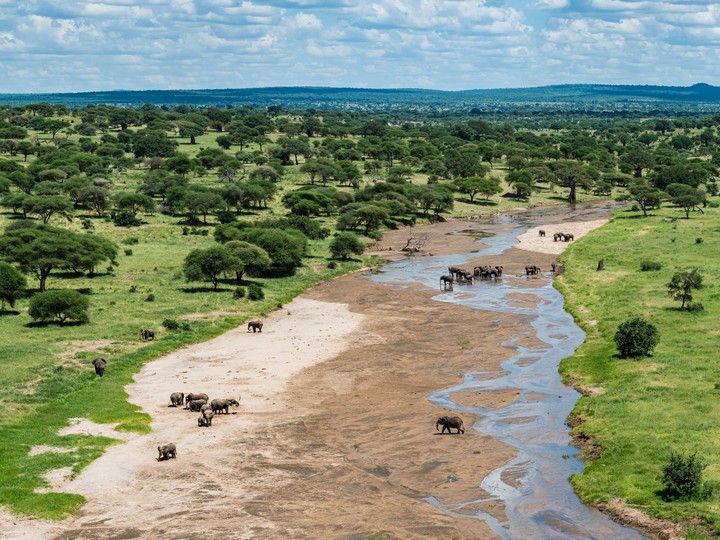
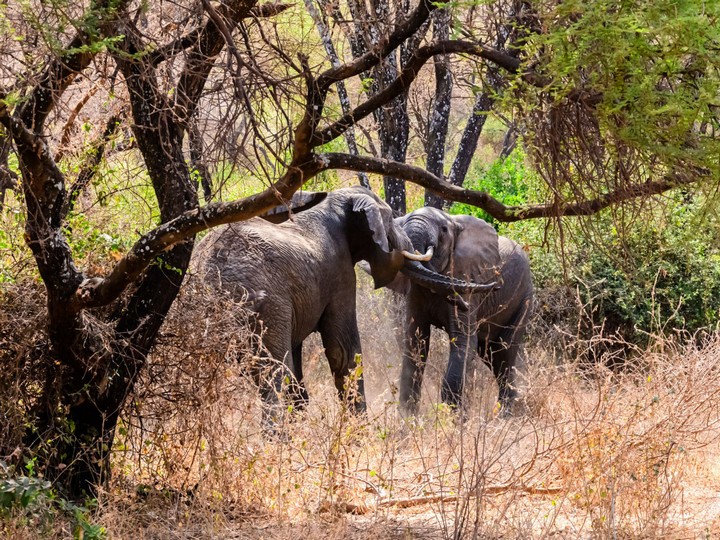
You will be collected from the hotel for a half-day game drive in Tarangire National Park after breakfast. A stop at Tarangire is truly memorable due to the breath-taking views of the Maasai Steppe and the mountains to the south. There is a large elephant population in Tarangire as well as baobab trees. As part of their annual migration, up to 30,000 zebras, 25,000 wildebeests, and 3000 elephants pass through this area. As we approach Arusha, the gateway to Kilimanjaro National Park, we arrive in the late afternoon.
African Tulip Hotel or similar
Breakfast, Lunch, Dinner
± 150 km
± 4 hours
We will travel to Amboseli today after a leisurely breakfast. The route passes the Marangu waterfalls – a moderately strenuous walk (sturdy shoes are recommended and a reasonable level of fitness is required). Our journey continues north to Amboseli National Reserve, where we will arrive in the afternoon. Please note that there will be a change in the guide and vehicle at the border crossing into Kenya.
Kibo Safari Camp or similar
Breakfast, Lunch, Dinner
± 210 km
± 4-5 hours (border crossing dependent)
We are going to spend the day at Amboseli National Park, one of Kenya’s most famous parks. The elephants in Amboseli are known for their large tusks, which make for the perfect safari photograph when set against the backdrop of Kilimanjaro’s snow-capped peak.
Kibo Safari Camp or similar
Breakfast, Lunch, Dinner
Following breakfast, we return to Nairobi. We will visit the Karen Blixen Museum after lunch. During the period of 1917 to 1931, Karen Blixen, author of “Out of Africa”, lived in the farmhouse where the museum is located until she left Kenya after a number of personal tragedies. We will then visit the Giraffe Centre and the Daphne Sheldrick Animal Orphanage. Founded in 1948, Tsavo East National Park in Kenya was named after the wife of David William Sheldrick, a famous naturalist who served as the park’s warden from 1948 to 1976. You will be able to spend an hour with the baby animals at the orphanage after they have been brought from the national park for a mud bath. Arrive at your hotel late in the afternoon.
The Boma Hotel or similar
Breakfast, Lunch, Dinner
The tour ends after breakfast, and you will be transferred to the airport.
Breakfast
Chat to our experts to help you plan your dream trip.
Most of East Africa, including Kenya, Tanzania, Uganda, and Rwanda, is situated in a malaria-endemic zone. While the risk is real, it should not deter you from traveling; it simply requires proactive preparation. Where is the risk highest? Malaria is generally more prevalent in low-lying, humid areas and coastal regions (like Zanzibar and Mombasa) compared to high-altitude areas (like the Ngorongoro Crater rim or the Rwanda highlands). The risk also increases during the "long rains" (March–May). How to Prepare:
Best Overall Months: June to October and January to February
If you’re looking for a sweet spot for both Southern and East Africa, the dry season from June to October and January-February is widely considered the best time to visit. Why?
Dry weather easier travel and fewer mosquitoes
Peak wildlife viewing animals gather around waterholes and are easier to spot
Cooler temperatures especially pleasant in places like Namibia, Botswana, and Kenya
Southern Africa (South Africa, Namibia, Botswana, Zimbabwe, Zambia)
Best months: May to September
June–August: Excellent for safaris; cool mornings, dry days
September–October: Hotter, but fantastic for wildlife as animals cluster near water
November–April: The green (rainy) season — landscapes are lush, but wildlife is harder to spot and roads can get muddy. Great for birdwatching.
Top pick: July or August — dry, clear, and great for game drives in Kruger, Chobe, and Etosha.
East Africa (Kenya, Tanzania, Uganda, Rwanda)
Best months: June to October and January to February
July–September Prime time for the Great Migration in the Serengeti and Maasai Mara
January–February Short dry season, good for safaris and gorilla trekking
March–May Long rains — travel is still possible, but muddy conditions and wildlife dispersal can be a challenge
Top pick July or August — Great Migration + ideal gorilla trekking conditions in Uganda and Rwanda
| Highlight | Best Time |
|---|---|
| Classic safaris | June – October |
| Fewer tourists | May or November |
| The Great Migration (Kenya/Tanzania) | July – September |
| Gorilla trekking (Uganda/Rwanda) | June – August, January – February |
| Victoria Falls at peak flow | March – May |
| Budget travel | Green season (November – April) |
The Great Migration is a perpetual cycle, not a single event. While the herds are always moving between Tanzania’s Serengeti and Kenya’s Masai Mara, the "best" time depends on the specific spectacle you want to witness. 1. The River Crossings (July – October)
Yes, most travelers require a visa to enter Kenya. You can apply for an e-visa online before your trip. It's advisable to check the latest visa requirements based on your nationality.
Yes, certain vaccinations are recommended or required, such as yellow fever, hepatitis A and B, typhoid, and malaria prophylaxis. Consult your nearest travel doctor or healthcare professional.
Key safari destinations include the Masai Mara National Reserve, Amboseli National Park, Lake Nakuru National Park, Tsavo National Parks, and Samburu National Reserve.
The Kenyan Schilling (KES) is the official currency. However, credit cards are widely accepted within the major cities and tourist areas. It is also advisable to carry some cash for more remote locations such as national parks and cultural regions.
For wildlife sightings, it is recommended that you travel during the dry season, June to October, or January to February. However, Kenya offers year-round attractions and the green season (November to December) is great for bird lovers.
Aside from the Big Five, Tanzania is home to tree-climbing lions (Lake Manyara and Serengeti), the endangered wild dog (Selous/Nyerere), black-and-white colobus monkeys (Arusha & Usambara), and the largest wildebeest migration on Earth.
Many tours include respectful visits to Maasai bomas, local markets, or village walks in the Usambaras. Some operators also connect travelers with Hadzabe hunter-gatherers or Datoga blacksmiths near Lake Eyasi for immersive cultural exchanges.
More questions? Let the Experts help
LET THE EXPERTS HELPPrice From
R101,765
15 Day Tanzania and Kenya Tour – East Africa Migration
This 15 Day East Africa Migration Safari lodge safari and follow the famous wildebeest migration through Tanzania and Kenya and discover all the wildlife that East Africa holds. This East Africa accommodated safari is a Small Group Safari (max 12) where you will spend all of your nights in lodges/chalets or permanent tented camps.
https://africanoverlandtours.com/wp-content/uploads/2025/08/serengeti-tanzania-safari-scaled-e1624365847180.jpg
https://africanoverlandtours.com/tours/15-day-tanzania-and-kenya-tour-east-africa-migration-accommodated/
"*" indicates required fields